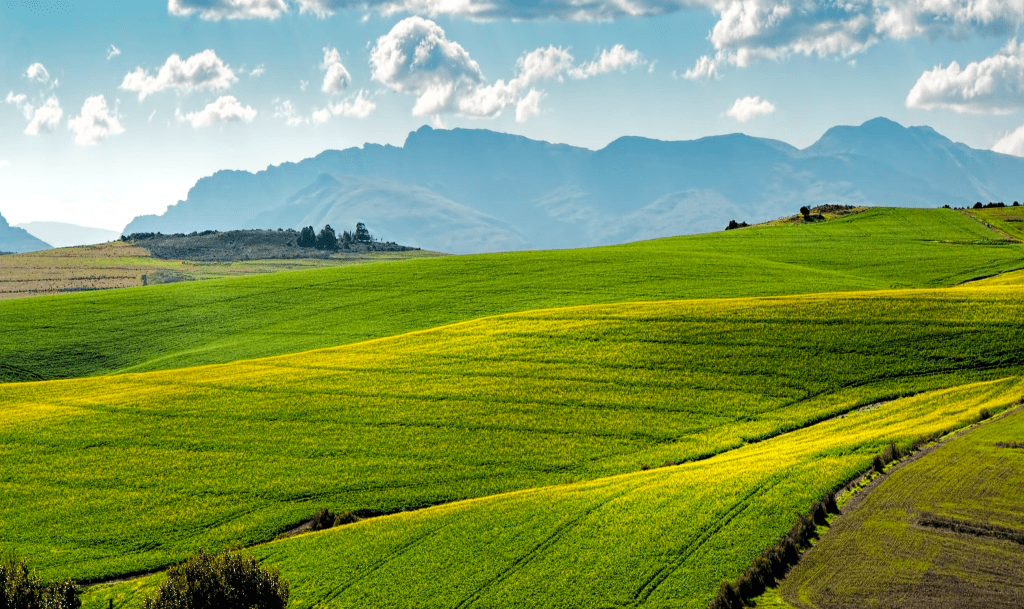
Ever wondered where the phrase “the grass is always greener on the other side” comes from? Well, if you ask me, I’d say it’s one of life’s great mysteries! This phrase perfectly encapsulates that all-too-familiar feeling when we glance at others and think, “Their life seems so much better than mine.”
Have I ever felt that way? Absolutely, and more often than you might think. And I bet you’ve felt the same too, right? No need for a survey to confirm this. It’s a universal truth!
But here’s the thing: these feelings often arise from comparing two completely different things. Take grass, for example. We think that the greener, the better. But what about different types of grass with different purposes? Like elephant grass versus centipede grass – which is superior? It’s not just about size or color. It’s about context and purpose.
This is where we often oversimplify the complex nature of happiness and the intricacies of sadness. We compare things that aren’t comparable, and in truth, there should be no need for comparison at all. Happiness and sadness are multi-faceted emotions that cannot be measured on a single, linear scale. Each person’s experience of joy or sorrow is unique, influenced by a myriad of factors including personal values, past experiences, and individual aspirations. What brings immense joy to one person might be of little significance to another. Similarly, what causes deep sadness in one individual may not impact someone else in the same way. This diversity in emotional experiences is what makes human life rich and varied, yet it’s often overlooked when we try to gauge our own contentment against others.
In our quest for happiness, we sometimes forget that it’s not a one-size-fits-all concept. It’s more like a mosaic, composed of different pieces that come together to form a unique picture for each individual. The same applies to sadness. It’s a complex emotion that can stem from various sources and manifests in different forms. By acknowledging this, we can better understand ourselves and others, and realize the futility of comparing our emotional landscapes with those of people around us. Embracing the uniqueness of our experiences allows us to appreciate our journey and find contentment within ourselves, rather than constantly seeking it in the mirage of another’s seemingly perfect life.
Abdullah bin Mas’ud once said, “with every happiness there is grief, and in every house filled with happiness, there is also an abundance of grief.” This statement resonates deeply, reminding us that bittersweet moments are a constant in life, experienced uniquely by each of us. It highlights the intertwined nature of joy and sorrow, and how they coexist in our lives, often in a delicate balance. This interplay is what adds depth and meaning to our emotional experiences. Recognizing this duality helps us appreciate the full spectrum of our emotions, rather than chasing an unattainable state of perpetual happiness.
It’s crucial to realize that life is never perfect. Everyone has their strengths and weaknesses. Every moment has its time. Therefore, the best way to navigate through our days is to cultivate gratitude towards the God. Gratitude shifts our focus towards the positive, steering us away from unproductive thoughts of defeat, competition, and stagnation. It helps us to embrace life’s imperfections and find beauty in the ordinary.
Gratitude is more than a simple feeling; it’s a profound practice of acknowledging and appreciating the small joys that life presents to us every day. It’s about noticing the subtle beauties, the brief moments of joy, and the small victories that we often overlook. Remember the profound words of the Prophet: “Whoever is not grateful for small things will not be grateful for large things.” This teaching underscores the importance of appreciating every aspect of our lives, regardless of its size or perceived significance.
In essence, the key to true contentment lies not in envying the perceived greenness of the grass on the other side of the fence, but rather in nurturing a deep sense of gratitude for our own “patch of green.” It’s about finding value and beauty in our own experiences, our own achievements, and our own journey, no matter how modest they may seem. This perspective shifts our focus from what we lack to what we possess, from longing for more to being thankful for what we have. Such a shift doesn’t just change our outlook, it transforms our entire experience of life, turning every day into an opportunity to celebrate and cherish our unique slice of the world.
In the end, life’s about finding beauty in our own journey. It’s about nurturing our grass, however green it may be, with a heart full of gratitude. When we do that, we might just realize that our grass is not just green enough, but also uniquely ours – a blend of joys, sorrows, achievements, and lessons that make up the beautiful tapestry of our life. This recognition is the key to a deeper understanding of our emotional world, allowing us to find true contentment in the rich, varied experiences that life offers. In embracing our unique emotional journey, we can find peace in the knowledge that our grass, in its own way, is just as green, just as lush, and just as full of life.
—
This is my very first attempt at writing in English, I hope all is well.
Tabik,
Ibnu Masud
 Secangkir Makna
Tinggalkan komentar